Repeated image briefs mean repeatedly gathering the same client context. Image Studio is a self-initiated local prototype that keeps references, visual rules, scene review and version history together, shaped by earlier manual image-making work.
My role
Product direction and workflow design · AI-assisted implementation
Open local app ↗Local app preview · Open while its server is running.
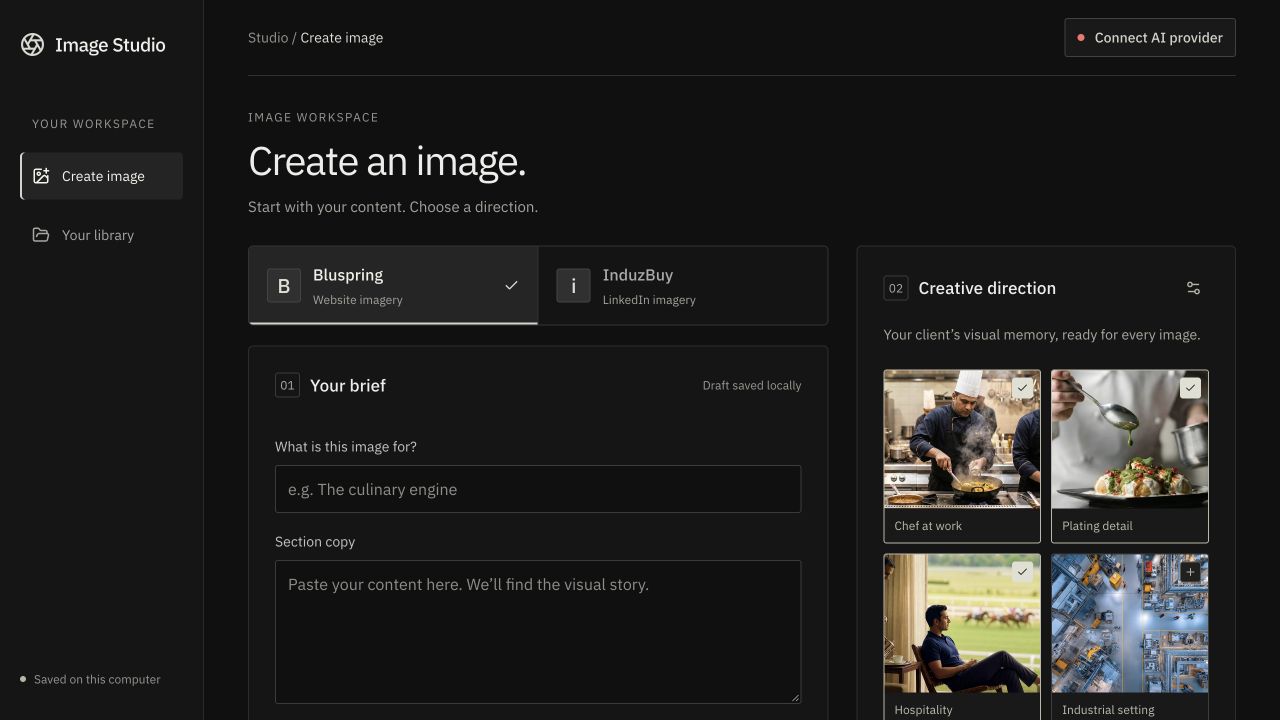
The local Image Studio interface brings the brief, client profile and reference selection together.
The app runs separately from this portfolio preview on this computer.
The manual workflow
The workflow started before the tool
Bluspring website imagery and InduzBuy LinkedIn visuals were created through manual ChatGPT workflows. Those projects informed a later question: how could client direction and the choices within each image brief stay organised between requests?
Client directions
Keep the context beside the request
Separate client profiles hold references and reusable rules. Each new brief adds purpose, copy, image type, colour and aspect ratio, bringing the recurring direction into the same interface as the new request.
Review the idea
Review the scene before the image
The prototype proposes two scene directions for a person to review before approving generation. Saved versions keep earlier settings and outputs together, allowing a revision to begin from a selected version.
01Set the brief
Choose a client, purpose, content, image type, colour and ratio.
02Shape the direction
Select the references and reusable rules that belong to this image.
03Review before generation
Compare two scene ideas, approve one, then keep versions for later revisions.
The local tool
Turn repeated choices into a workflow
The local tool brings profiles, briefs, references, scene selection and versions into one interface. I directed the product workflow and built it with AI assistance. The earlier client images informed the tool; they were made before it existed.
Prototype status
A prototype with an open next step
The local prototype is implemented. Successful live image generation, output quality and production use remain unverified, so the case study shows the workflow and interface rather than claiming proven generation results.